



After four cancellations, the Geneva International Motor Show welcomed car enthusiasts. Europe's largest motor show, it is the traditional venue for announcements and presentations of the latest innovations and new models.

Among the most anticipated innovations this year, no doubt, is the integration of artificial intelligence (AI), particularly ChatGPT, into the car of tomorrow. In particular with the presentation of the future new R5 from Renault which will incorporate a significant amount of AI – though we don't yet know which kind – to optimize the use of the 100% electric motor and also the driver experience through, for example, new connected infotainment services. This also implies a 4G mobile connection. The Renault brand even unveiled in Geneva the name of the avatar with which drivers and passengers will be able to chat starting in October 2024: it will be… Reno!
DS, the world's first manufacturer to integrate ChatGPT as standard
Well-known brands such as Tesla, BMW, Audi-Volkswagen, Mercedes, Lexus and also Peugeot have already or are in the process of giving in to the sirens of AI, most often that signed OpenAI, by integrating ChatGPT 3.5 into their chassis.
While many manufacturers are still experimenting , the French DS is the first in the world to integrate generative AI in series in its DS 3, 4, 7 and 9 models, starting in March of this year and in 18 countries and no fewer than 13 languages! Peugeot announced in Geneva that it will do the same across its entire connected i-cockpit range, including the E-3008 and the upcoming E-5008 (to be marketed in October 2024) once its trials are complete.
Already impressive applications
Artificial intelligence has already taken the wheel of our cars, in bits and pieces at first, exploiting above all its computing capacities, often invisibly, to optimize performance, in particular that of an electric motor battery, or to anticipate braking distances, to allow us to liter during the journey…

In recent years, two areas have brought AI into the passenger compartment :
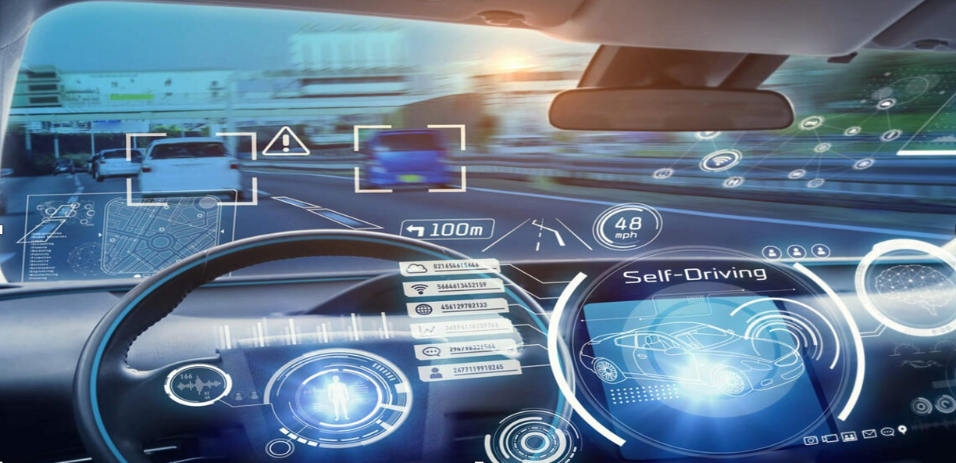
- First, the autonomous 100% driving and its spectacular ability to adapt to its environment. Use of AI on which the French equipment manufacturer Valéo is working, as shown in the picture by the newspaper l'Argus.
- Then the rvoice recognition with execution of simple orders using a reduced standard vocabulary.
More recently, AI has become a a true driving "assistant", capable of detecting our fatigue at the wheel, indicating and alerting on changes in speed limits, adapting the speed, sending dictated responses to messages received by telephone, closing windows, turning on the GPS and indicating the direction to follow.
Now, AI, especially with ChatGPT is able toinitiate an “exchange”, a discussion between the driver or his passengers and the car’s equipment, even if There is still room for improvement as demonstrated by the daily newspaper Le Parisien. An intermediation that now allows you to personalize infotainment and comfort by using complete, sometimes complex, sentences to turn on the air conditioning, "but not too loud", search for a radio station broadcasting news or their favorite music, start a podcast on a specific or fun subject, suggest stops on the route planned taking into account your tastes or habits… (curiosities, gourmet restaurants, etc.).
It also monitors or even “pilots” your electric motor and its recharge, your safety equipment, can brake in place of the driver, warn of a risk of breakdown, or even automatically trigger an alert in the event of an accident, etc. And tomorrow, maintenance and diagnostics can be done online.
A 15-year innovation in full democratization
The history of AI in cars is still in its infancy, certainly, but it didn't begin in Geneva in 2024. We have to go back to 2009 – yes, you read that right! – to see the first visible applications of this revolutionary technology in cars. In 2009, in fact, the first car to integrate AI was the famous Google car, which has evolved considerably since then. since then. This already revolutionary AI was designed to allow the car to navigate without human intervention, thus ushering in the era of autonomous vehicles.