

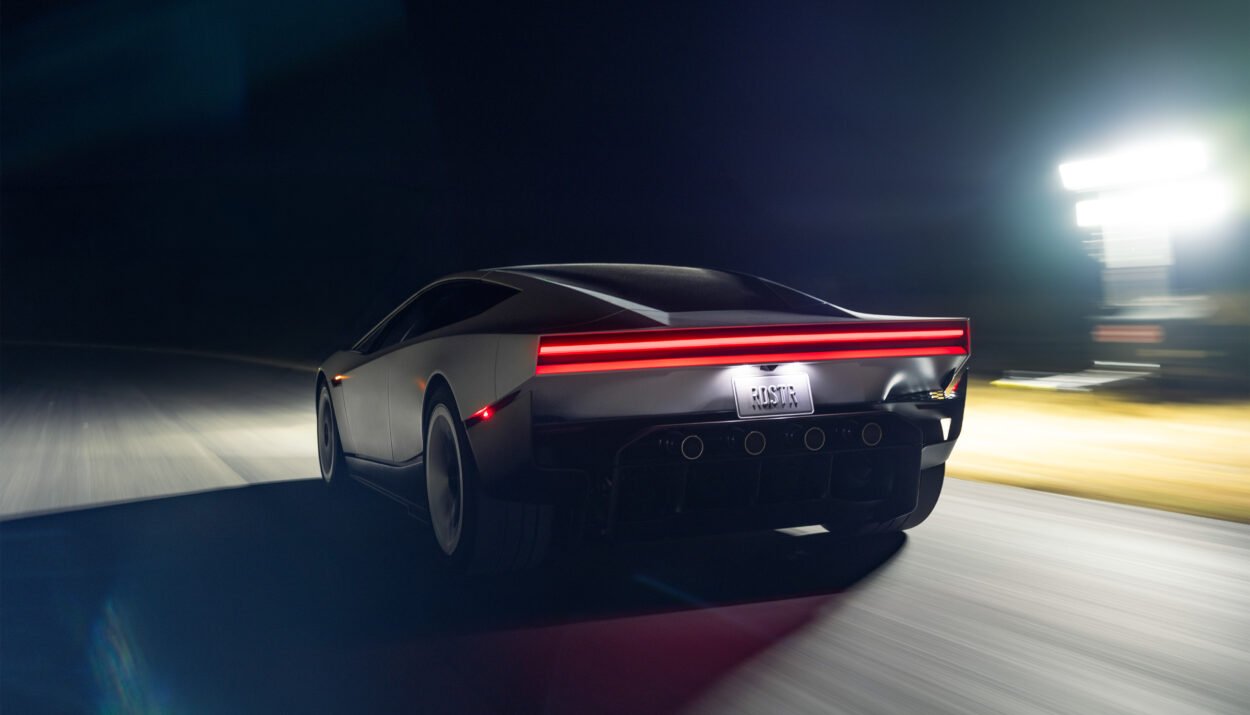

A car driving upside down, leaving its ramp and righting itself: Tesla unveiled a spectacular new version of its Roadster on October 15th in Texas. Cold gas propulsion, underbody suction, and active aerodynamics are just some of the technologies behind these images. It remains to be seen what will actually be possible.
Wazup-InTech · October 16, 2026
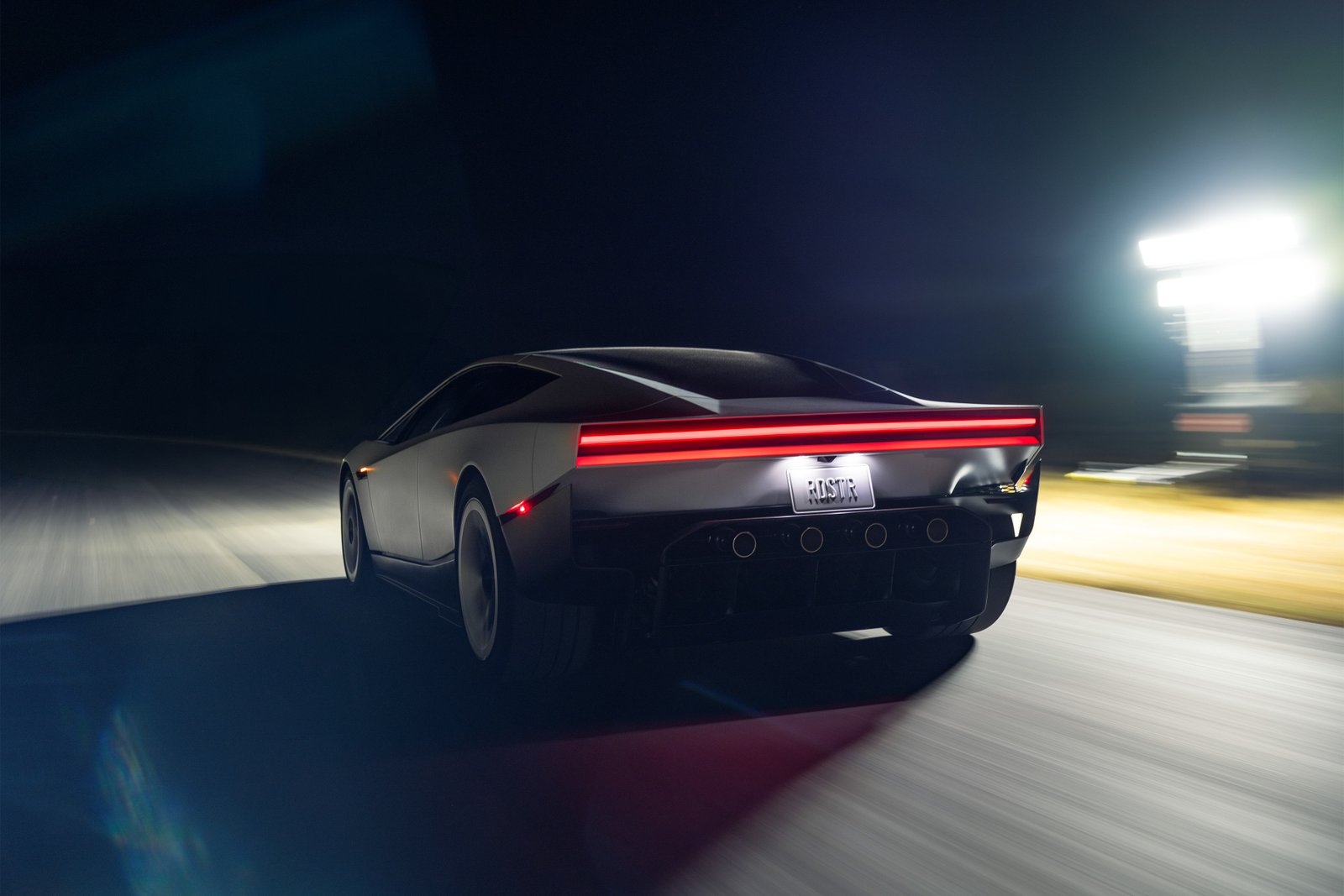
It looked like a scene from Batman or Iron Man: a car climbing vertically, its wheels pointing skyward, then launching itself into the air before landing back on its wheels. On October 15th in Texas, Elon Musk gave the unveiling of his new Roadster the feel of a blockbuster.
At SpaceX's McGregor test site in Texas, Tesla demonstrated a prototype climbing a curved structure, driving upside down, then using its thrusters to rotate and right itself. The automaker also claimed a 0-60 mph (approximately 97 km/h) acceleration time of 0.8 seconds during the presentation. These figures represent the demonstration organized by Tesla, not the results of an independent test presented here. Source: Car and Driver.
The sequence is impressive. To understand its significance, however, three things must be distinguished: holding onto an inverted surface, propelling oneself into the air, and presenting a usable automobile to a customer. These three challenges require neither the same technologies nor the same proof.
The Roadster during the demonstration on October 15th in Texas. Capabilities shown in a controlled environment, distinct from the conditions of use of the future production vehicle. Post by @teslaownerssv. Watch the video on Instagram.
Two mechanisms for two different feats
The first misconception would be to believe that the fans are simply used to make the Roadster take off, like the propellers of a drone. Tesla describes a different division of roles.
Its suction system draws air from beneath the vehicle to generate downforce. Cold gas thrusters provide thrust, notably to stabilize the car during flight. The manufacturer combines these systems with active aerodynamic elements. Source: Tesla.
In other words, one mechanism helps the car stay pressed against a surface; the other allows it to change its direction when it moves away from it. Seeing them work in the same demonstration gives an impression of continuity. However, their physical function is different.
This distinction also explains why the images should not be summarized by a phrase like "a Tesla capable of flying anywhere." They show a prepared scenario, with a dedicated infrastructure. They do not, on their own, provide information about how long the vehicle can remain airborne or its capabilities in an unforeseen environment.
Driving backwards, Tesla is not alone on this track
The idea of a car held upside down by suction already has a documented precedent. In April 2025, the British manufacturer McMurtry presented a demonstration of its Speirling on a specially built rotating platform.
Once the platform was flipped, the car moved without external support, according to the account and images published by McMurtry. Its ventilation system generates downforce even when stationary. The manufacturer specifically highlights this independence from speed. Source: McMurtry Automotive.
The comparison is useful for understanding the automotive benefits of the device. Beyond its use in stunts, having low-speed downforce can also be of interest to engineers seeking to exploit tire grip.
This doesn't allow us to conclude that the two cars have the same performance or design. The McMurtry precedent mainly demonstrates that we should avoid presenting reverse driving as an invention that emerged with that Tesla event.
Cold gas thrusters, not a conventional rocket engine
The partnership with SpaceX suggests the idea of fuel being burned in a nozzle. However, cold gas propulsion relies on a different principle. A pressurized gas is expelled to create thrust, without combustion.
NASA describes this family of systems as a proven technology in space applications, particularly for certain control maneuvers. It also emphasizes that their total impulse remains relatively low. Gas storage and the available quantity are among the technical compromises. Source: NASA.
The most accessible image is that of an inflated balloon that moves forward when it is allowed to deflate. The general principle helps to understand the reaction produced by the expulsion of gas; it obviously does not describe the complexity of controlling an automobile.
Applied to the Roadster, this system raises several questions. How many maneuvers can be performed? How long does it take to restore the system's initial capabilities? What is the weight and size required for installation? The answers are essential to assess real-world use, beyond a few seconds of demonstration.
Performance, Thrust, Rocket: three configurations to distinguish
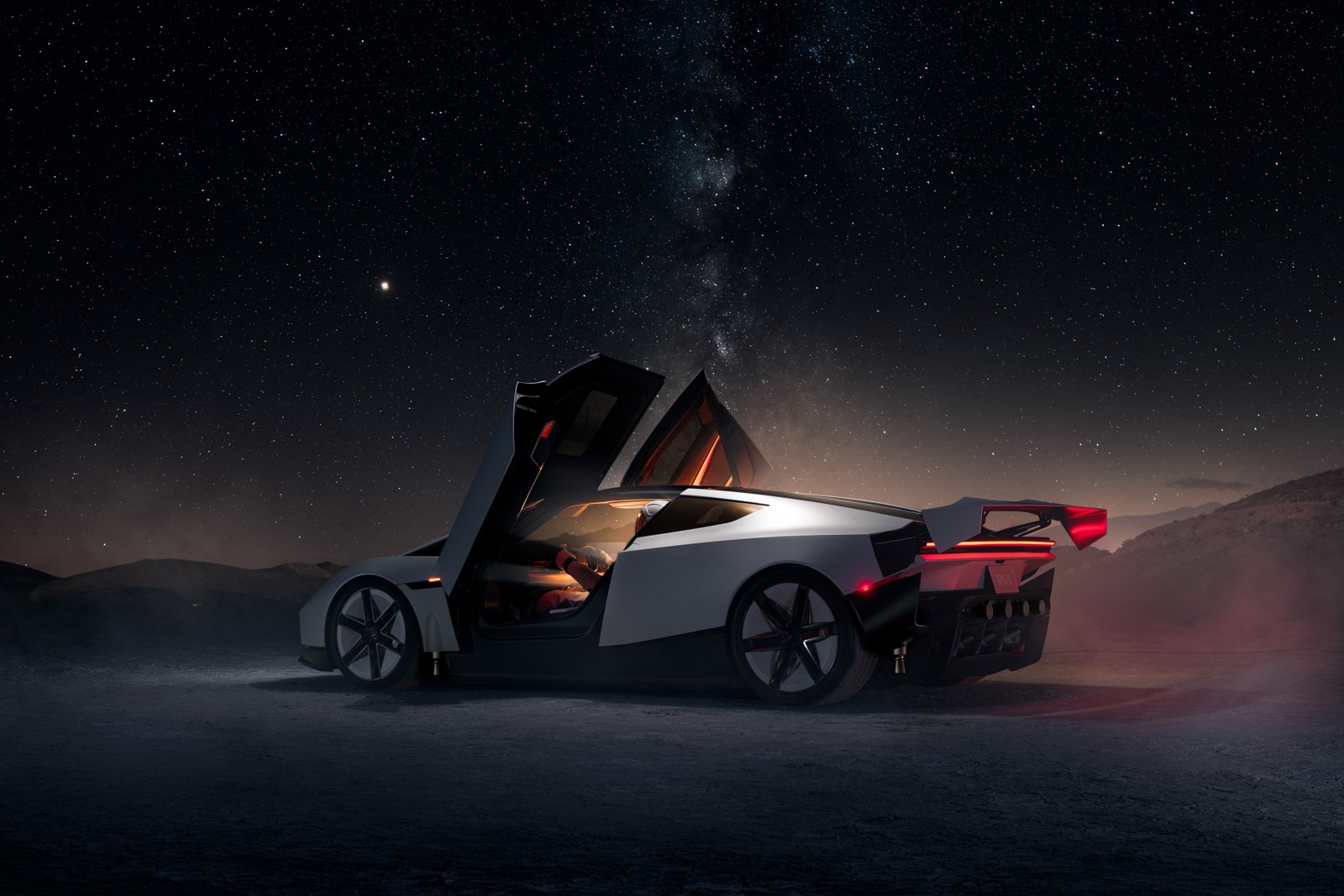
The official page presents a two-seater "Performance" base model with active aerodynamics and a slipstream. The "Thrust" option adds rear-mounted thrusters, with a claimed acceleration time of under one second from 0 to 60 mph.
The "Rocket" configuration is distinguished by a single seat and thrusters distributed around the vehicle to allow for forward, upward, and rotational movement. It is offered by invitation only. Tesla specifies that it is not approved for use on public roads. Source: Tesla.
This distinction changes how the advertisement is interpreted. Booking a Roadster does not automatically mean getting the car that performs the most spectacular aerial sequences.
A car taking off is not yet a means of air transport
The term "flying car" effectively describes the images. However, it doesn't adequately answer the questions a user might have. How far can it travel in the air, under what conditions, and with what safety margins?
The Associated Press reports brief flights and reiterates the restrictions on road use for the Rocket configuration. The agency also notes that Tesla did not immediately announce a final price during the presentation. Source: Associated Press.
At this stage, it would therefore be premature to describe the Roadster as a solution for bypassing traffic jams. The scenario shown is closer to a demonstration of exceptional capabilities than the presentation of a new mobility service.
Future assessments should focus on the repeatability of maneuvers, vehicle control, and its behavior in the event of a failure. These are points to be documented, not problems that the images allow us to consider resolved.
2028, a new deadline after a long wait
The timeline also deserves to be put into perspective. During the 2017 presentation, Tesla already announced a new Roadster for 2020, with ambitious performance figures. TIME reported at the time a promised 0-60 mph acceleration time of 1.9 seconds and a claimed range of 620 miles. These were the manufacturer's objectives. Source: TIME, November 2017.
Elon Musk is now aiming for a start of production in 2028. Axios notes that the project is accumulating expectations and questions, particularly around the practical utility of a vehicle capable of leaving the ground. Source: Axios.
For prospective buyers, several milestones will be more informative than a single date, a final configuration, reproducible tests, a fixed price, and precise delivery terms. A presentation reveals a direction; it does not yet guarantee the entire product.
The real test will begin after the images
The Roadster embodies two promises. The first, immediately visible, is to push the boundaries of automotive spectacle with unusual movements. The second remains to be seen, as it involves transforming these features into useful, repeatable, and accessible performances within a clearly defined framework.
Analyzing this presentation leads us to consider both what brings the car back to the ground and what propels it away. Suction, thrust control, and their coordination could constitute more enduring engineering topics than just the takeoff sequence.
Tesla has succeeded in giving the Roadster a new appeal. To establish the scope of this innovation, data, testing, and a final product will now be needed. The next crucial step will come when others besides the manufacturer can verify what this machine can actually do.